
Table of Contents
How My Digital Nomad Dream Began
Thanks to the pandemic,digital nomad culturefinally stepped into the spotlight ☺️.
So many students began researching digital nomads, and I was interviewed several times too.
Over the past two years, I somehow went from being the person who chased down unusual people for interviews to becoming the unusual person others wanted to interview. It is a strange feeling.
I realized I had moved from being afraid people would laugh at my "impossible fantasy" to a stage where "my life is my dream."
A Quick Introduction
I'm Kelsi, the self-proclaimed little princess who escaped the office.
My first full-time job after graduation was fully remote. I stayed for exactly two years, and from last year until now, I have lived nomadically in six countries.
#RuleHacker #LifePlayer #TechPlayer are the three keywords I love most for describing myself.
My motto is: "Nothing is impossible if I truly want it."

Why I Wanted to Become a Digital Nomad
Since junior high school, I had questioned Taiwan's conventional education system and felt lost about what my future career and life were supposed to look like.
Whenever I had the chance, I listened to stories about unconventional lives and tried new experiences.
The more confused I became in university, the more active my life became.
I entered innovation and entrepreneurship competitions while interning at all kinds of companies.
I finally understood that I was simplynot made to stay in an office all the time!
The moment I understood all this, I felt desperate 🥹.
Even after discovering this emerging lifestyle called digital nomadism on foreign websites, I had no idea how to begin. It felt too early to start a business, I was not confident enough to freelance, and I had not even experienced what working life was really like.
He landed his dream internship offer at Ferrari Taiwan, but was rejected because he was Taiwanese with only US citizenship.
He called HR directly and tried to negotiate a solution that would comply with the rules, only to be rejected again.
He then wrote about his ideals to HR's supervisor. The supervisor was moved and wanted to help, but HR rejected him once more because of the regulations.
Finally, he wrote to the CEO at Ferrari's European headquarters. After reading the letter, the CEO called him internationally and said he was willing to help find a way.
When HR saw him yet again, they were completely exasperated: "How is it you again?!"
- The brave get to enjoy the world first.
- If the road will not turn, I have to find another way around.
- When I speak about my ideals first, I am more likely to find someone who sees my potential.
How I Found a Job That Supported Digital Nomadism
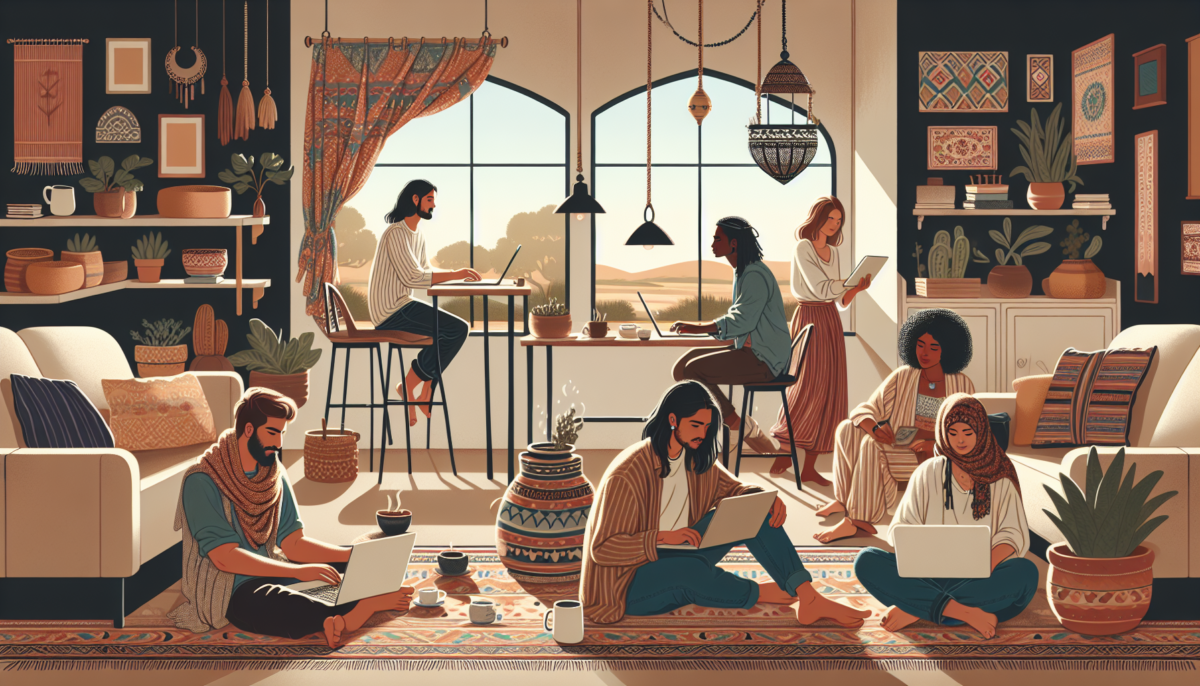
I had applied for a marketing-planning role at Brand A, one of my boss's companies, but I was not genuinely interested in the work. I also wanted to enjoy a gap year after graduating and only wanted a part-time job to begin with. After the interview, I wrote him a letter and boldly told him all of this honestly. I also emphasized the strengths I had in other areas and explained what kinds of work those skills could do when combined.

The Challenges and Growth of Living Abroad as a Nomad
-
I was afraid my abilities were not good enough and that I would disappoint my boss.Once I noticed that my parents and grandparents were visibly getting older, I began imagining what I would do if something happened to them while I was far away. My solution was to video-call them whenever I reached a place I loved and show it to them too. This allowed them to participate indirectly in my life and helped all of us feel more at ease.
I had to prove to my boss that I was trustworthy. The more trust I built, the more freedom I could earn later.
That is why remote positions are rarely offered directly to new graduates.
I was grateful that my boss gave me this opportunity, and I did not want to disappoint him. I even hoped I could become the first successful example—someone who influenced my boss and, from the top down, helped shift the company's culture so other colleagues might consider a different way of living.
At the time, my arrangement was still unusual. Many people may have known this kind of life existed without ever imagining it could be possible for them too. -
Most managers in Taiwan still like seeing employees sitting in an office.Once I noticed that my parents and grandparents were visibly getting older, I began imagining what I would do if something happened to them while I was far away. My solution was to video-call them whenever I reached a place I loved and show it to them too. This allowed them to participate indirectly in my life and helped all of us feel more at ease.
這真的是一個很實際的原因🤣。一出社會真的需要花一點時間累積基礎財富值,也順便了解讓自己生活舒服的花費大概是多少,能投資金融和自己的預算是多少等等。也先存下一小筆緊急備用金,讓所有的底氣充足😇😇😇。 -
害怕個人能力不足,讓老闆失望Once I noticed that my parents and grandparents were visibly getting older, I began imagining what I would do if something happened to them while I was far away. My solution was to video-call them whenever I reached a place I loved and show it to them too. This allowed them to participate indirectly in my life and helped all of us feel more at ease.
At the time, I was the only fully remote employee in the office. My boss even hinted that I should avoid making my colleagues feel the arrangement was unfair. But my colleagues were wonderful: they loved pushing me to go out and have fun 🤣, and they understood that I had negotiated those terms based on my abilities 🥰.
I also did not want to leave for another unstable living environment before my work had become stable, and end up burning the candle at both ends.
所以通常遠距工作很少直接開給社會新鮮人。
我感激我老闆給我這個機會,我並不想讓他失望。我甚至期許自己能夠當第一個案例,去影響我老闆,從上到下影響公司整個文化,讓其他同事考慮新的生活。
畢竟大環境下,我這樣的狀態還屬於特殊個案,很多人或許知道有這樣子的生活,但沒想過自己也有這個可能。 - 台灣多數主管,還是喜歡看員工坐在辦公室Once I noticed that my parents and grandparents were visibly getting older, I began imagining what I would do if something happened to them while I was far away. My solution was to video-call them whenever I reached a place I loved and show it to them too. This allowed them to participate indirectly in my life and helped all of us feel more at ease.
One of my former managers was fine with office employees being passive, constantly asking to be spoon-fed, and making mistakes easily, as long as they could join a meeting whenever he squeezed one into the schedule. It felt as though everything was acceptable simply because they were under his eye.
像我的之前主管只要能配合他見縫插針隨時開會,就算辦公室員工被動、伸手牌,很容易出錯。感覺只要在他眼皮底下,一切好像就沒關係?

Discovering the Darker Reality of Digital Nomad Life
-
In Asian culture, one mistake can make people assume you have only been out having fun.Once I noticed that my parents and grandparents were visibly getting older, I began imagining what I would do if something happened to them while I was far away. My solution was to video-call them whenever I reached a place I loved and show it to them too. This allowed them to participate indirectly in my life and helped all of us feel more at ease.
On a Taiwanese salary, it is genuinely difficult to spend freely and live comfortably in more developed countries. If I wanted to live like an emperor, Southeast Asia was the only realistic option. But internet infrastructure in many places was unreliable; sometimes it felt like pure luck. And if I wanted to keep nomadic travel affordable, the cheapest approach was usually to continue onward on one-way flights or travel overland. Returning to Taiwan and then flying out again was especially expensive. -
Safety.Once I noticed that my parents and grandparents were visibly getting older, I began imagining what I would do if something happened to them while I was far away. My solution was to video-call them whenever I reached a place I loved and show it to them too. This allowed them to participate indirectly in my life and helped all of us feel more at ease.
如果以預算考量,以台灣薪資水準,真的不容易 COVER 在進步國家享受放肆的消費。想要過舒服的皇帝生活,只能去東南亞國家。不過很多網路建設真的不是很妙,有時就像在賭運氣。而且如果真的要持續省錢游牧,基本上買單程順勢飛過去或走陸路最划算,飛回來台灣在飛出去真的特別燒錢。 -
Making friends is easy—and difficult.Once I noticed that my parents and grandparents were visibly getting older, I began imagining what I would do if something happened to them while I was far away. My solution was to video-call them whenever I reached a place I loved and show it to them too. This allowed them to participate indirectly in my life and helped all of us feel more at ease.
自己一個女生出去,除了基礎的偷竊問題,還有人身安全要非常注意,我就在大馬路上被語言騷擾、捏屁股和被導遊偷竊過。 -
交朋友容易,也不容易Once I noticed that my parents and grandparents were visibly getting older, I began imagining what I would do if something happened to them while I was far away. My solution was to video-call them whenever I reached a place I loved and show it to them too. This allowed them to participate indirectly in my life and helped all of us feel more at ease.
If you love working from cafés, coliving may not make sense because you are paying for a workspace you do not use. In a hostel, it can be easy to strike up a conversation, but because the other person is often a backpacker passing through, it can be hard to build a deeper friendship. Later, when I truly wanted companionship, I had to search different online communities for people who happened to be in the same place or were also digital nomads. -
My relationship with my family.Once I noticed that my parents and grandparents were visibly getting older, I began imagining what I would do if something happened to them while I was far away. My solution was to video-call them whenever I reached a place I loved and show it to them too. This allowed them to participate indirectly in my life and helped all of us feel more at ease.
自從發現爸媽、爺爺奶奶明顯變老了之後,開始會想像到,若是萬一我出遠門時,他們有什麼意外,那我該怎麼辦?後來我的作法變成是每到一個喜歡的地方,就打視訊電話回去讓他們也看看,讓他們也間接參與我的生活,也比較會感到放心。
What I Learned
- Adapt on the fly, stay steady when circumstances change, and become exceptionally good at solving problems.
- Develop strong safety awareness and razor-sharp intuition.
- Find balance in relationships.
- Know the purpose of each stay, so you do not agonize over spending money you should spend or miss experiences you came to have.
- Keep your self-awareness radar switched on, make use of every idea and experience, and protect your physical and mental balance between work and life.
FAQs
1. What is the biggest challenge of digital nomad life?
The biggest challenge is adapting to each country's environment and culture while maintaining an efficient working rhythm. It demands strong self-management and adaptability.
2. How do I find a job that supports digital nomad life?
Focus on company culture and values, and look for employers that support remote work and innovation. You also need to demonstrate your range of skills and adaptability so an employer can understand the particular value you bring.